Today Together, Tomorrow Too

Today Together, Tomorrow Too is a compositionof faces, places and stories collected by different directors throughout Italy. OIDA – participated film conceived and curated by Antonietta De Lillo – composes a portrait of love at our times through fragments of different materials – documentaries, investigations, animations and found footage.
The casualness and the normalcy of the stories that we can see in this documentary are the key to express the most elusive of all feelings – love. The result is a complex image, that represents the density of our relationships in this moment of crisis and social transformations in which we live.
Forty years have gone by since the Italian referendum on divorce and Pier Paolo Pasolini’s Love Meetings. Today Together, Tomorrow Too  investigates the feeling of love portraying the changes in our country – the breakdown of marriage and traditional family values, the human and economic crisis, the lack of work, the change of sexual behaviour, the bio-technologic revolution, the growth of immigration and the difficulty in confronting cultures that are different from our own.
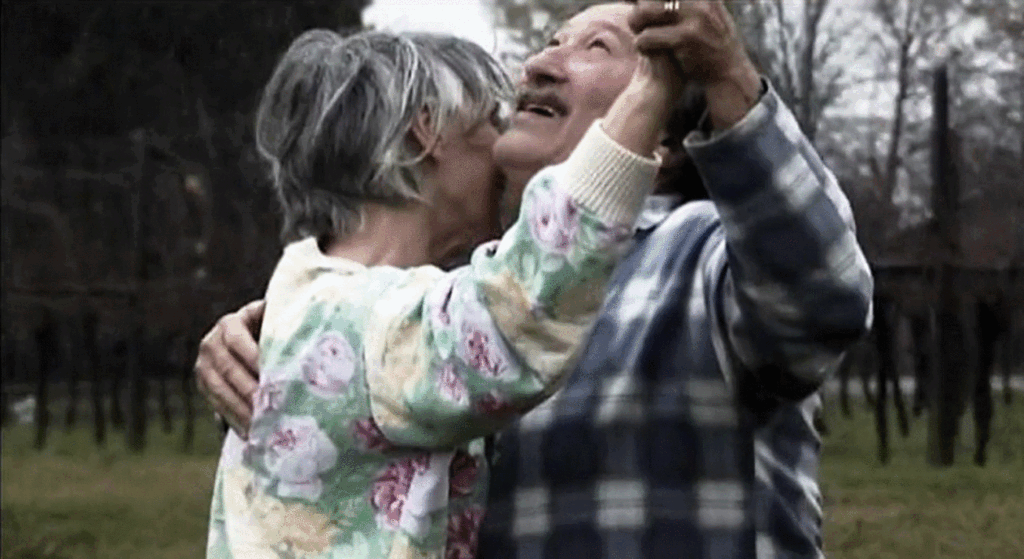
We chose to startfrom the darkest aspects of love -abandonment, intolerance, violence and hate. Through the street interviews and the stories collected by the directors that participated in the project, we will meet couples who have been together all their lives and people who have never met love, along withthe those who have to cope with the harsh feelings that usually follow a breakup. Traditional families, enlarged families, exploded families, recomposed families, new balances made of people who are willing to stay together even after their stories are over. Different forms of love, sometimes more fragile, sometimes more powerful and free go togetherwith the vision of the youngest people interviewed, who search for an absolute pure and true love that might be free of social judgement and of conditioning based on age, culture and gender.
The participated film by marechiarofilm shows love in its widest form, meaning not only a relationship between two people, but also the love of parents for their children, love towards strangers and love as an opportunity to elevate ourselves beyond ourselves, our selfishness and our fears. It is a confirmation that in our selfish society more and more concentrated on cynic and individualistic models, love is still the most powerful energy moving things and is often the best antidote to our solitude.
Let’s Go


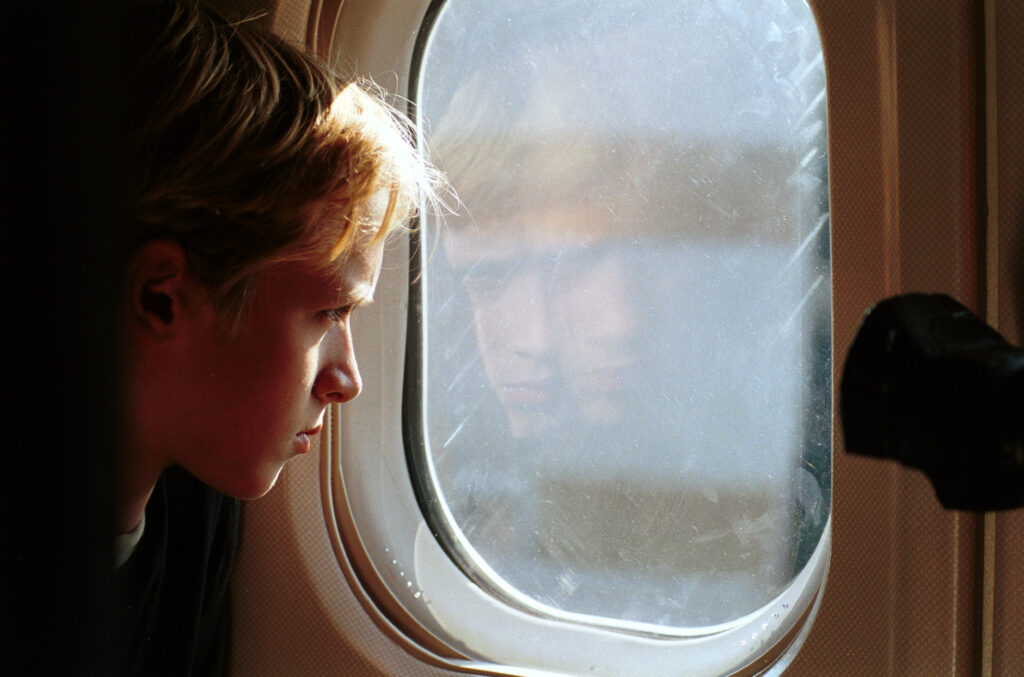
The story of Luca is that of a 46 year-old photographer who has been forced to retire from life and love; it is also the story of many other people overwhelmed by isolation and the economic emergency. But Luca is also an artist who has begun writing a letter addressed both to an ideal love as well as to us all. He guides us in a cosmopolitan journey through experiences that are often more arduous than his and recounts the story of a person who is determined to carry on without anger while struggling not to be overcome by the events.

The crazy woman next – door


conversation with Alda Merini

Alda Merini tells her life in a personal and familiar narrative, fluctuating between public and private, lingering on the most significant chapters of her existence: childhood, womanhood, love, maternity and the relationship with her children, madness and the lucid reflection on poetry and art. The face of the poetess and the details of her eyes, hands, and body create a portrait that does not hide the contradictions of one of the most important and renowned literary figures of the twentieth century.

Director’s statement
Ever since i made Ogni sedia ha il suo rumore in 1995, i have always wanted to retrieve the precious unused footage from the encounter with Alda Merini. At the time, that material was entwined with Licia Maglietta’s performance, inevitably cutting out parts of the conversation with Alda Merini. This footage was recovered almost twenty years later thanks to the collaboration of Rai Cinema, becoming The crazy woman next-door, which restores that extraordinary encounter in its entirety
Antonietta De Lillo


Saharawi

Songs and the testimony of the Saharawi people in the actuality of their exile.

For over thirty years the Saharawi people have been living in the Nigerian desert, struggling to be recognized and regain their land that had been appropriated by Morocco.Through traditional songs and images of life in the desert, the film gives voice to a people who, with dignity and determination, are only asking to exist and return to their homelands by the sea.

FILI INVISIBILI

Elena con la piccola Benedetta, la prima figlia nata in Italia, nel 1993 va a vivere in India dove sposa Baba Ji, col quale ha altri tre figli. Il fratello Manolo, maestro di sci, sposa dopo vent’anni una sua ex allieva belga ed hanno una figlia, Clara, che ha 6 anni e vive tra Bruxelles (insieme al fratello adottivo Alexandre, etiope, oggi sedicenne) e Alagna, piccolo comune delle Alpi. Una famiglia che abbraccia il mondo intero. Il viaggio del regista inizia dall’India dove vola ad incontrare l’amica Elena che non vede da 18 anni, e poi a Bruxelles, dove vive Clara.

Seguendo l’indicazione dello scrittore Orhan Pamuk “Le storie individuali sono di gran lunga più adatte a illustrare quanto sia profonda la nostra umanità”, il regista Andrea Papini ha realizzato un “appunto a matita” su una eccentrica famiglia di amici. Riprese realizzate con una piccola videocamera, che meritano di essere editate e mostrate a un pubblico più vasto di quello familiare. Sono scritti veloci e imprecisi, ma realizzati con la grafite, che contiene il carbonio, la materia della vita.

The betrothed

The love story of a couple in which he had been a she.

A testimony of the force of love that binds two people, a present-day betrothed couple.
The narration proceeds as a thriller in which the two protagonists conceal a mystery: visible traces, scars on an arm, details that worm their way into the story until the enigma is revealed. He had previously been a she.
A contemporary metamorphosis made possible by their love.


A house on a knife – edge

In a c minor trio, a viola d’amore, a cello and a violin are capable of grasping the unforseeable from life and still play with its possibilities.

Giovanni (Luigi Pistilli) a womanizer enamoured of life, Teo (Riccardo Cucciola) an old school chum and meticulous collection of watches, and Maria (Marina Vlady) a childhood sweetheart, always ready to help her fellow compatriots in Italy, inherit an apartment in Rome. After an arduous beginning, this casual cohabitation brings new energies to the lives of all three.  The sudden death of one of them puts the surviving two in a quandary: should they cancel this experience and go back to the dreariness of their destinies, or rather continue on the path they have embarked upon towards a future together? 

Planet Tonino

At my age I don’t like hardly anything about myself, or about others. I want the dirtiest, the wrongest, the most interrupted stuff. While we speak a camel is going by. There…I wish it were like that.
Tonino Guerra

Portrait of Tonino Guerra, one of the most prominent Italian screenwriters, author for world-famous directors such as: Fellini, Tarkovski, Antonioni, the Taviani brothers, Mikailkov. The documentary goes back through his career as a screenwriter and shows his everyday life at Pennabilli.  In this tiny village near Rimini, Tonino Guerra has succeeded in constructing a world in his image and likeness through the realization of a series of works-signs which express his indomitable vitality and creativity: fountains, road signs, “thinking” gardens. It is an encounter with a man who possesses an enormous vital force, with which he reconstructs his “fables” in order to defeat boredom and the predictability of everyday life

O sole mio

The history and success of the song ‘O sole mio, a world famous classic.

A tale that peers behind the clichés of Naples, too often defined only as “sole-pizza-amore” (sun-pizza-love). Through the history of the song ‘O sole mio, from its birth in 1898 to its consecration, the film narrates the two faces of Naples: on the one hand the paradisiacal, luminous postcard-city, on the other hand, the dark mysterious Naples of the vicoli (the alleys). A kaleidoscope consisting of evidence ranging from the era of silent movies to our days, with the celebrated interpretations of Mario Del Monaco, Elvis Presley, Luciano Pavarotti, Sergio Bruni, and occasional performers such as Paul McCartney and the Spice Girls.

Maruzzella

The encounter of two solitudes: a transsexual and a young woman in a red-light cinema.

Maruzzella is a transvestite who haunts the corridors of red-light cinemas like a modern Phantom of the Opera, offering his clients very unusual sexual performances until he encounters a young woman, a desolate viewer of hard films, who will radically change the life of our protagonist.